Problem-solving is one of the most valuable skills you can develop throughout your professional career. Every workplace experiences challenges, whether they involve missed deadlines, communication difficulties, customer complaints, technical issues, or unexpected changes in business operations. Employees who can approach these situations calmly and find practical solutions often become valuable members of their teams.
However, solving workplace problems is not always easy. Sometimes, the real cause of an issue is difficult to identify. In other situations, employees may feel pressured to make quick decisions without having enough information. This can lead to mistakes, misunderstandings, and unnecessary stress.
The good news is that problem-solving is a skill that can improve with practice. You do not need to be a manager or an experienced professional to become better at handling challenges. By developing critical thinking, communication, decision-making, and analytical abilities, you can become more confident when dealing with difficult situations.
Here are practical ways to improve your problem-solving skills at work.
1. Understand the Problem Before Looking for Solutions
One of the biggest mistakes people make when dealing with workplace challenges is trying to solve a problem before understanding what caused it.
For example, imagine that your team regularly misses project deadlines. You might immediately assume that employees are not working hard enough. However, the actual problem could be poor planning, unclear instructions, unrealistic deadlines, or a shortage of resources.
Before suggesting a solution, take time to understand the situation.
Ask yourself questions such as:
- What exactly has gone wrong?
- When did the problem begin?
- Who is affected?
- What factors may have contributed to it?
- Has something similar happened before?
Understanding the real issue helps you avoid wasting time on solutions that only address the symptoms.
2. Develop Your Critical Thinking Skills
Critical thinking helps you examine information carefully instead of accepting every assumption as fact.
At work, employees regularly receive information, instructions, reports, and suggestions that require careful evaluation. Being able to separate facts from opinions can help you make better decisions.
You can improve your critical thinking by:
- Asking questions when information is unclear.
- Examining different explanations for a problem.
- Checking whether information is accurate.
- Considering the possible consequences of a decision.
- Avoiding decisions based entirely on emotions.
- Looking at challenges from different perspectives.
For example, if customer complaints increase, do not immediately conclude that the customer service team is performing poorly. Examine feedback, response times, product quality, and other possible causes.
The more carefully you evaluate information, the easier it becomes to identify practical solutions.
3. Break Large Problems Into Smaller Tasks
Some workplace problems appear complicated because they involve several different issues at the same time.
Instead of trying to solve everything at once, divide the situation into smaller and more manageable parts.
For example, if a company is struggling with poor project performance, you can examine:
- Planning and scheduling.
- Communication between team members.
- Availability of resources.
- Employee responsibilities.
- Progress monitoring.
- Project deadlines.
Each area can then be examined separately.
Breaking problems into smaller tasks makes it easier to identify what needs attention first. It also helps teams avoid feeling overwhelmed by large challenges.
4. Improve Your Communication Skills
Good communication plays an important role in workplace problem-solving.
Many professional challenges occur because people misunderstand instructions, fail to share important information, or make assumptions about their responsibilities.
When dealing with a problem, communicate clearly with the people involved. Explain what you have noticed, ask relevant questions, and listen carefully to their responses.
You should also learn how to present solutions in a professional manner.
For example, instead of saying, “This project is failing because nobody knows what they are doing,” explain the specific difficulties and suggest ways to improve coordination.
Effective communication helps colleagues understand problems, share ideas, and work together towards solutions.
5. Learn to Consider Different Solutions
There is rarely only one way to solve a workplace problem.
A solution that works for one department may not be suitable for another. This is why it is important to explore different possibilities before making a final decision.
For example, if a team struggles to complete tasks on time, possible solutions might include:
- Improving the project schedule.
- Reassigning responsibilities.
- Providing additional training.
- Using project management software.
- Reducing unnecessary meetings.
- Improving communication between departments.
Compare the available options and consider their advantages, disadvantages, costs, and possible outcomes.
Being open to different ideas can help you discover better ways of handling workplace challenges.
6. Develop Your Decision-Making Abilities
Problem-solving and decision-making are closely connected. After identifying a problem and examining possible solutions, you must decide which approach is most appropriate.
Good decision-making involves considering available evidence, understanding potential risks, and evaluating the likely results.
Before making an important workplace decision, consider:
- Will this solution address the main problem?
- Do we have enough resources to implement it?
- How long will it take?
- Could it create additional challenges?
- Who will be affected by the decision?
- How will we measure success?
For smaller issues, a quick decision may be appropriate. However, complicated problems may require additional research, consultation, and careful planning.
Learning when to act independently and when to seek guidance is also an important part of professional decision-making.
7. Work Effectively With Your Team
Some problems cannot be solved by one person alone. They require cooperation between colleagues with different experiences, knowledge, and responsibilities.
Teamwork allows employees to share ideas and identify solutions that one individual might overlook.
To improve collaborative problem-solving:
- Listen to your colleagues’ suggestions.
- Respect different opinions.
- Share useful information.
- Avoid blaming others unnecessarily.
- Focus on the issue rather than personal disagreements.
- Agree on responsibilities and deadlines.
For example, if a business experiences repeated customer service problems, employees from sales, marketing, and customer support may need to work together to identify the cause.
A collaborative approach encourages shared responsibility and often produces more practical results.
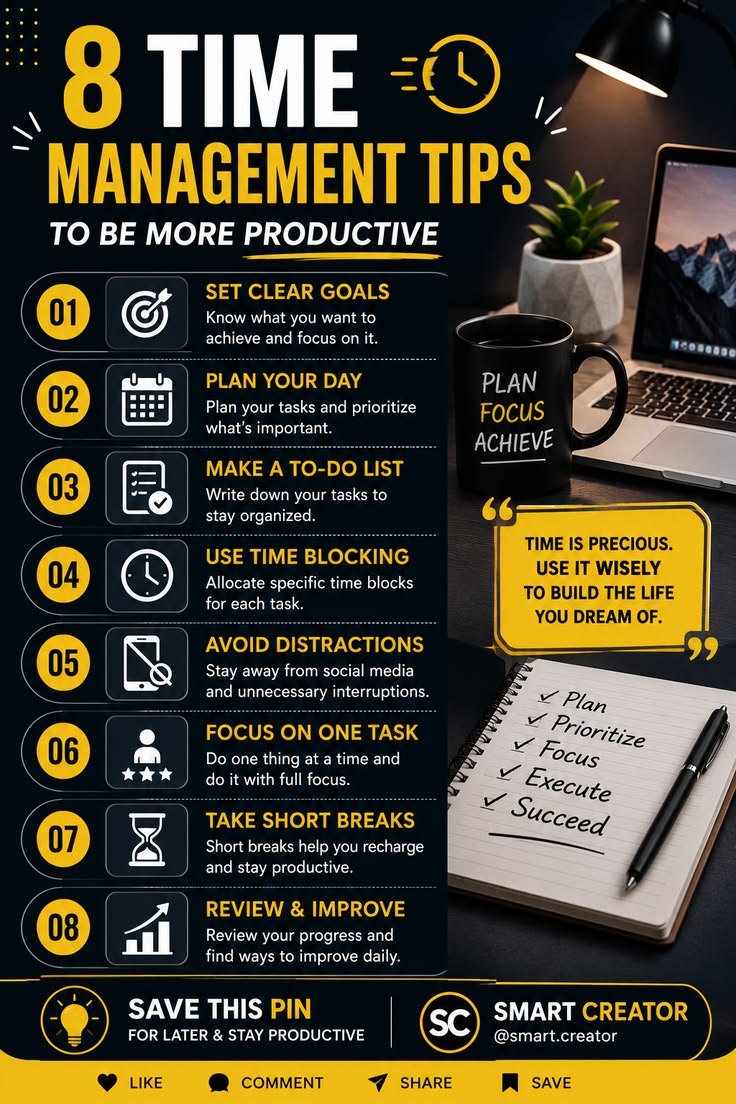
8. Improve Your Time Management Skills
Poor time management can make workplace problems more difficult to handle.
When employees struggle to organize their responsibilities, important tasks may be delayed, deadlines may be missed, and small issues can become larger challenges.
You can improve your time management by creating daily task lists, setting priorities, using calendars, and dividing large assignments into smaller activities.
When several problems arise at once, identify which ones require immediate attention.
For example, a technical issue affecting an entire department may need to be addressed before a minor administrative task.
Learning to prioritize helps you use your time effectively and respond to workplace challenges without becoming overwhelmed.
9. Use Technology to Support Problem-Solving
Modern workplace technology provides tools that can help employees identify problems, organize information, and develop solutions.
Depending on your profession, useful tools may include:
- Microsoft Excel: Organizing information, analysing data, and identifying patterns.
- Trello: Managing tasks and tracking project progress.
- Asana: Coordinating responsibilities and monitoring deadlines.
- Microsoft Power BI: Analysing business information and creating reports.
- Google Sheets: Sharing information and collaborating with colleagues.
- AI tools: Helping brainstorm ideas, summarize information, and organize possible solutions.
Technology should support your thinking rather than replace it. Always check important information, especially when using AI-generated suggestions to make professional decisions.
10. Learn From Your Mistakes
Not every solution will produce the expected results. Sometimes, a decision may fail, or a problem may return after you thought it had been resolved.
Instead of viewing every mistake as a personal failure, treat it as an opportunity to learn.
After handling a difficult situation, review what happened.
Ask yourself:
- What did I do correctly?
- What could I have handled differently?
- Was the real cause identified?
- Did the chosen solution work?
- What should I remember next time?
This process helps you recognize patterns and avoid repeating similar mistakes.
Professionals who learn from experience often become more confident when dealing with unfamiliar challenges.
11. Stay Calm Under Pressure
Workplace problems can sometimes create stress, especially when deadlines are approaching or customers are unhappy.
However, allowing emotions to control your decisions can make a difficult situation worse.
When facing pressure, take a moment to understand what needs to be done. Focus on the facts, identify the most urgent issue, and consider your available options.
If necessary, take a short break before responding to a stressful situation.
Staying calm does not mean ignoring serious problems. It means approaching them with a clear mind and making decisions based on what is most likely to work.
12. Continue Developing Your Professional Skills
Problem-solving becomes easier when you regularly improve the skills that support it.
Consider taking online courses in critical thinking, business communication, project management, data analysis, leadership, and decision-making.
You can also develop your abilities by reading professional books, participating in workplace discussions, attending training programmes, and learning from experienced colleagues.
Try applying one new technique to a real workplace challenge. Practical experience will help you understand how different problem-solving methods work in everyday situations.
Conclusion
Improving your problem-solving skills at work requires patience, practice, and a willingness to learn. By understanding problems before reacting, developing critical thinking, improving communication, considering different solutions, and learning from mistakes, you can become more effective in your professional responsibilities.
You should also remember that problem-solving is not limited to managers or senior employees. Every professional can develop this ability, regardless of their industry, experience, or job position.
Start by paying closer attention to everyday workplace challenges. Ask better questions, listen to different perspectives, and look for practical ways to improve situations.
Over time, these habits can help you become a more confident, reliable, and valuable professional.