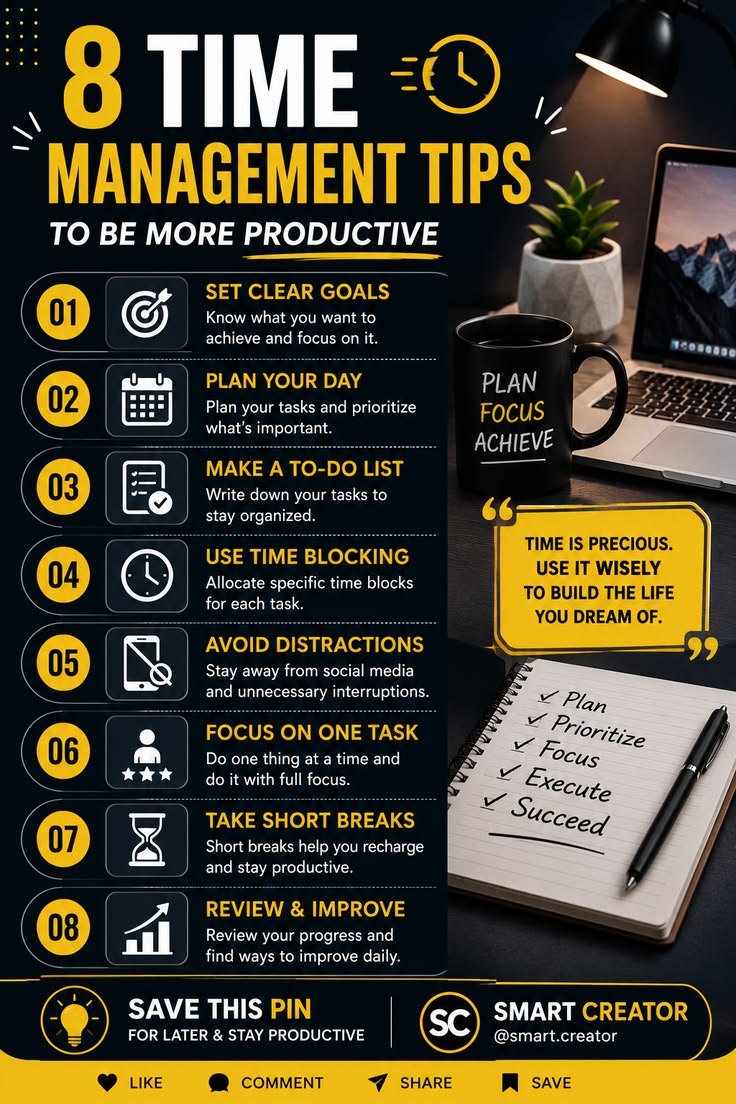

Managing time effectively is one of the most valuable skills in today’s workplace. Whether you work in an international company, manage a small business, work remotely, or earn money as a freelancer, the ability to organize your responsibilities can have a major impact on your professional success.
Many employees struggle with busy schedules, constant notifications, unexpected tasks, meetings, and approaching deadlines. Even when people spend long hours working, they may find it difficult to complete their most important responsibilities. This often happens because being busy does not always mean being productive.
Time management involves planning how you use your available hours, prioritizing important activities, and avoiding unnecessary distractions. Workplace productivity focuses on completing meaningful tasks efficiently while maintaining the quality of your work.
The good news is that you do not need complicated systems to improve these abilities. Developing a few practical habits can help you become more organized, reduce stress, and achieve better results.
So, how can you improve your time management and workplace productivity? Here are some effective strategies to consider.
1. Start Your Day With a Clear Plan
One of the easiest ways to improve workplace productivity is to plan your day before starting your main responsibilities.
Without a clear plan, you may spend too much time deciding what to do next or responding to tasks that are not particularly important.
At the beginning of each workday, identify the activities you need to complete. Write them in a notebook, digital planner, calendar, or task management application.
Your daily plan might include:
- Completing an important work assignment.
- Responding to essential emails.
- Attending scheduled meetings.
- Preparing a report.
- Following up with clients or colleagues.
- Reviewing unfinished responsibilities.
Organizing your tasks gives you a better understanding of how to use your available time.
You should also leave some room for unexpected activities because workplace responsibilities can change throughout the day.
2. Prioritize Tasks According to Importance
Not every task deserves the same amount of attention. Some responsibilities have strict deadlines or directly affect business operations, while others can wait.
Learning how to prioritize helps you focus on activities that produce the greatest value.
One useful approach is to divide tasks into four categories:
Urgent and important: Tasks that require immediate attention, such as approaching deadlines or serious workplace problems.
Important but not urgent: Activities that contribute to long-term goals, such as professional development, planning, and improving business processes.
Urgent but less important: Requests that need attention but may be delegated or handled efficiently.
Neither urgent nor important: Activities that consume time without contributing much to your objectives.
This approach can help you avoid spending the entire day responding to minor requests while neglecting important responsibilities.
3. Set Realistic Daily and Weekly Goals
Setting goals gives your workday direction and helps you measure progress.
Instead of writing a general goal such as “be more productive,” identify specific results you want to achieve.
For example, you could aim to complete a project report, respond to important client inquiries, or finish a particular stage of an assignment.
You can also organize goals into daily and weekly targets.
Daily goals help you manage immediate responsibilities, while weekly goals allow you to monitor larger projects and long-term progress.
Make sure your goals are realistic. Setting too many targets can create unnecessary pressure and make it difficult to concentrate.
4. Use Time Blocking to Organize Your Schedule
Time blocking is a scheduling method that involves assigning specific periods to different activities.
Rather than working without a clear structure, you decide when to focus on particular responsibilities.
For example, a professional might organize a workday like this:
| Time | Activity |
|---|---|
| 8:00–8:30 AM | Review priorities and emails |
| 8:30–10:30 AM | Focused work on important projects |
| 10:30–11:00 AM | Break and short administrative tasks |
| 11:00 AM–12:30 PM | Meetings and collaboration |
| 12:30–1:30 PM | Lunch break |
| 1:30–3:00 PM | Complete assignments and reports |
| 3:00–3:30 PM | Respond to messages |
| 3:30–4:30 PM | Review progress and prepare for tomorrow |
This is only an example. Your schedule should reflect your workplace responsibilities, working hours, and personal needs.
Time blocking can help reduce unnecessary task switching and make your day more predictable.
5. Reduce Workplace Distractions
Distractions can make even simple assignments take much longer than necessary.
Common workplace distractions include social media notifications, unnecessary conversations, personal phone calls, background noise, and frequent interruptions.
To improve concentration, identify the distractions that affect your work most frequently.
You can try the following:
- Silence nonessential phone notifications.
- Keep your workspace organized.
- Close unnecessary browser tabs.
- Avoid checking social media during focused work periods.
- Use headphones when appropriate.
- Communicate your availability to colleagues.
- Set specific times for checking messages.
You do not need to eliminate every interruption. However, controlling avoidable distractions can help you complete important responsibilities more efficiently.
6. Learn to Manage Emails and Messages Efficiently
Emails and workplace messages are important communication tools, but checking them constantly can interrupt your concentration.
Instead of opening your inbox every few minutes, consider setting specific periods for reviewing and responding to messages.
For example, you might check emails at the beginning of the workday, after lunch, and before finishing work.
You should also organize messages according to their importance.
Respond to urgent requests first, schedule time for messages that require detailed answers, and remove unnecessary notifications.
For remote professionals working with international clients, clear written communication is particularly important. Organizing messages can help prevent missed instructions, forgotten deadlines, and repeated conversations.
7. Use Productivity and Project Management Tools
Technology can make workplace organization easier when used correctly.
Many professionals use digital applications to manage tasks, organize schedules, communicate with colleagues, and monitor project progress.
Some useful tools include:
Trello: Helps organize tasks using visual boards and cards.
Asana: Allows teams to assign responsibilities, create deadlines, and monitor projects.
Microsoft To Do: Helps individuals organize daily tasks and reminders.
Google Calendar: Supports scheduling, appointments, and meeting reminders.
Notion: Provides tools for organizing notes, documents, projects, and personal workspaces.
Slack: Supports communication and collaboration between teams.
You do not need to use every available application. Choose tools that solve specific problems in your workflow rather than introducing unnecessary complexity.
8. Break Large Projects Into Smaller Tasks
Large projects can sometimes feel overwhelming, especially when they involve several stages and strict deadlines.
One way to manage them is to divide the work into smaller, more manageable activities.
For example, instead of writing “complete business proposal” on your task list, divide it into:
- Research the client’s requirements.
- Gather relevant information.
- Prepare the proposal outline.
- Write the main sections.
- Review the document.
- Make corrections.
- Submit the completed proposal.
Smaller tasks make it easier to understand what needs to be done and monitor your progress.
They can also help you identify delays before they affect the entire project.
9. Learn to Delegate Responsibilities
Productivity does not mean doing everything yourself.
In many workplaces, employees and managers have opportunities to delegate tasks to colleagues who have the appropriate skills and experience.
Delegation allows you to focus on responsibilities that require your attention while distributing other activities across the team.
However, effective delegation requires clear communication.
When assigning a task, explain what needs to be completed, establish a reasonable deadline, provide the necessary information, and clarify the expected result.
Avoid delegating responsibilities without giving people the support or authority they need to complete them.
10. Take Regular Breaks to Maintain Concentration
Working continuously for several hours may seem productive, but it can lead to mental fatigue and reduced concentration.
Short breaks give your mind an opportunity to recover before returning to demanding activities.
One popular approach is the Pomodoro Technique, which involves working in focused intervals followed by short breaks.
A traditional version uses 25 minutes of focused work followed by a five-minute break. After completing four intervals, you take a longer break.
You can adjust the timing depending on your responsibilities and concentration levels.
During breaks, consider stretching, walking, drinking water, or stepping away from your screen.
The goal is to maintain sustainable productivity rather than forcing yourself to work without rest.
11. Improve Your Communication and Teamwork Skills
Poor communication can waste valuable time.
For example, unclear instructions may cause employees to repeat tasks, misunderstand project requirements, or submit work that does not meet expectations.
Strong communication helps teams understand responsibilities and resolve problems more quickly.
To improve workplace communication:
- Explain your ideas clearly.
- Ask questions when instructions are unclear.
- Share progress updates.
- Listen carefully to colleagues.
- Confirm important deadlines.
- Provide constructive feedback.
- Keep discussions focused on their objectives.
For international teams, communication should also account for different time zones, cultural expectations, and language preferences.
Clear communication reduces confusion and helps projects move forward.
12. Avoid Multitasking on Important Activities
Many professionals believe handling several tasks simultaneously makes them more productive.
However, constantly switching between unrelated activities can reduce concentration and increase mistakes.
For example, writing a report while repeatedly checking messages may make it harder to maintain a clear line of thought.
Instead, try completing similar tasks together and giving important assignments your full attention.
You might dedicate one period to writing, another to administrative activities, and a separate period to meetings.
This approach helps you maintain focus and reduces the mental effort involved in repeatedly changing activities.
13. Learn to Say No When Necessary
Taking on too many responsibilities can affect your productivity and the quality of your work.
Although helping colleagues is important, accepting every request may leave you without enough time to complete your existing assignments.
Learning to communicate your workload professionally can help you maintain realistic expectations.
For example, if someone asks you to take on an additional task, explain your current priorities and discuss when you could reasonably complete it.
You can also ask your manager which responsibility should receive priority when several deadlines overlap.
Saying no respectfully does not mean refusing to cooperate. It means recognizing your available time and managing responsibilities realistically.
14. Organize Your Workspace
Your working environment can influence how easily you concentrate and complete tasks.
A disorganized desk, misplaced documents, and unnecessary clutter can create distractions.
Try to maintain a workspace where important materials are easy to access.
Useful habits include:
- Keeping essential documents organized.
- Removing unnecessary items from your desk.
- Using folders to arrange digital files.
- Maintaining a clear task list.
- Organizing computer files with understandable names.
- Keeping frequently used tools accessible.
If you work remotely, create a dedicated work area where possible. A comfortable and organized environment can help establish a clearer separation between professional responsibilities and personal activities.
15. Review Your Performance and Improve Your Routine
Improving productivity requires understanding how you currently spend your time.
At the end of each workday or week, review what you accomplished and identify areas that need improvement.
Ask yourself:
- Which tasks took longer than expected?
- What caused unnecessary delays?
- Which activities were completed successfully?
- Did I spend enough time on important responsibilities?
- What should I change in my schedule?
- Which tasks should receive priority next week?
You can use these observations to improve your working habits gradually.
For example, if you regularly spend too much time responding to emails, you may need a better message-management routine.
If meetings interrupt your most productive hours, consider discussing alternative scheduling arrangements with your team.
Common Time Management Mistakes to Avoid
Even professionals who understand time management can develop habits that reduce productivity.
Some common mistakes include:
Planning too many tasks: An unrealistic schedule can create pressure and make it difficult to complete important assignments.
Ignoring breaks: Continuous work can contribute to fatigue and reduced concentration.
Procrastinating: Delaying difficult assignments often creates unnecessary pressure near deadlines.
Constantly checking notifications: Frequent interruptions make it harder to concentrate.
Failing to prioritize: Spending too much time on minor activities can delay important work.
Avoiding delegation: Trying to handle everything alone can create an unnecessary workload.
Not reviewing progress: Without evaluating your routine, you may continue repeating habits that waste time.
Recognizing these mistakes is an important step toward developing a more effective working routine.
Conclusion
Improving time management and workplace productivity requires planning, discipline, communication, and consistent effort.
By setting realistic goals, prioritizing important responsibilities, organizing your schedule, reducing distractions, and using suitable productivity tools, you can make better use of your working hours.
It is also important to understand that productivity is not about working every minute of the day. Taking breaks, communicating effectively, and maintaining a manageable workload are essential parts of sustainable professional performance.
Whether you work in an international company, manage a remote team, run a business, or work as a freelancer, these habits can help you become more organized and reliable.
Start with a few simple changes, evaluate your progress, and gradually develop a routine that supports both your professional responsibilities and personal well-being.