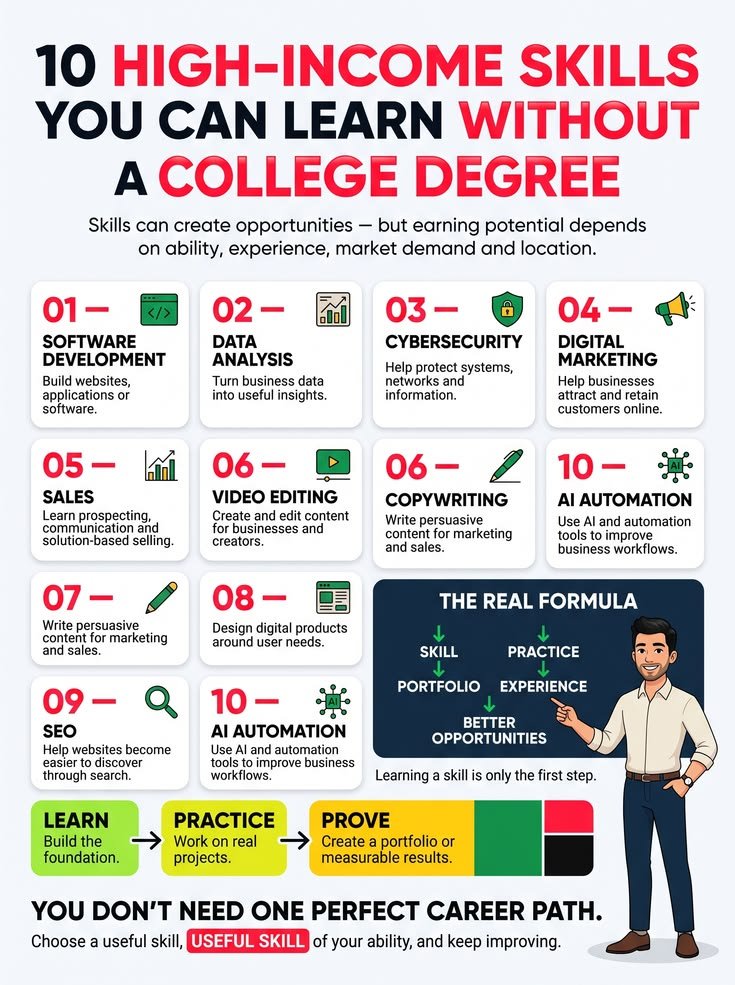

Freelancing also creates opportunities for people who want to earn money from their skills without necessarily having a traditional university degree or full-time office job.
However, building a successful freelance career requires more than simply creating an account on a freelancing platform. You need valuable skills, a professional portfolio, effective communication, reliable work habits, and the ability to find clients consistently.
So, how can you start freelancing from home and gradually turn it into a sustainable career?
1. Choose a Freelance Skill That People Need
The first step is choosing a skill that businesses, individuals, and organizations are willing to pay for.
You do not need to offer every service available online. It is often better to concentrate on one skill, develop your ability, and gradually expand your services.
Some popular freelance skills include:
- Content writing and copywriting
- Graphic design
- Website development
- Video editing
- Social media management
- Search engine optimization (SEO)
- Virtual assistance
- Data analysis
- Digital marketing
- Translation and transcription
- Mobile app development
- AI-assisted business services
Before choosing a skill, consider your interests, existing abilities, and the demand for the service.
For example, someone who enjoys writing could explore blog writing, website content, or copywriting. Someone interested in technology might learn website development, data analysis, or software testing.
2. Learn and Improve Your Skills
Having an interest in freelancing is a good starting point, but clients expect quality work. This means you should invest time in learning and improving your chosen skill.
You can develop professional abilities through online courses, tutorials, practical exercises, digital learning platforms, and industry-related communities.
For example, a beginner interested in graphic design can learn how to use design software and practise creating social media graphics, advertisements, and business presentations.
If you want to become a freelance writer, practise writing articles, product descriptions, website content, and professional emails.
You do not necessarily need an expensive course to get started. Free learning resources can help you understand the basics before deciding whether to invest in advanced training.
The most important thing is to practise regularly rather than collecting certificates without developing practical experience.
3. Create a Professional Portfolio
A portfolio is one of the most important tools for attracting freelance clients. It allows potential customers to see examples of your work before deciding whether to hire you.
If you are new to freelancing, you may not have previous clients or professional experience. Fortunately, you can create sample projects to demonstrate your abilities.
For example:
- A writer can publish three or four sample blog articles.
- A graphic designer can create sample logos and promotional designs.
- A video editor can produce short demonstration videos.
- A web developer can build sample websites.
- A social media manager can prepare sample content calendars.
Organize your best work in a professional portfolio that is easy to access.
You can use a personal website, online portfolio platform, or professional profile to showcase your projects.
Remember that quality matters more than quantity. A few strong examples can communicate your abilities more effectively than dozens of unfinished projects.
4. Choose the Right Freelancing Platforms
Freelancing platforms help connect independent professionals with businesses and individuals looking for specific services.
They can be useful when you are starting because you do not always need to find clients independently.
Some well-known platforms include:
- Upwork: Offers opportunities across writing, design, programming, marketing, administration, and other professional services.
- Fiverr: Allows freelancers to create service listings and attract customers.
- Freelancer.com: Connects freelancers with clients posting different types of projects.
- PeoplePerHour: Provides opportunities for independent professionals offering digital and business services.
You can also find freelance clients through LinkedIn, professional communities, business websites, and personal networking.
Before registering, review each platform’s fees, payment methods, eligibility requirements, and rules for freelancers in your country.
5. Build a Strong Freelance Profile
Your freelance profile introduces you to potential clients. It should clearly explain what you do, who you help, and why someone should consider hiring you.
A professional profile should include:
- A clear and appropriate profile photograph.
- A specific professional headline.
- A short introduction about your services.
- Your relevant skills and experience.
- Portfolio samples.
- Certifications, where relevant.
- Your preferred types of projects.
Avoid using vague descriptions such as “I can do anything online.”
Instead, describe your service clearly. For example, you could introduce yourself as a freelance content writer specializing in SEO blog articles for business websites.
A focused profile makes it easier for clients to understand your expertise.
6. Learn How to Find and Attract Clients
Finding clients is one of the biggest challenges for new freelancers. Even if you have excellent skills, you need to communicate your services to people who may need them.
Start by searching for projects that match your abilities. Read job descriptions carefully and submit proposals that address the client’s actual requirements.
A good proposal should explain:
- Your understanding of the project.
- How your skills can help.
- Relevant examples of previous or sample work.
- How you would approach the assignment.
- Any important questions about the project.
You should also explore opportunities outside freelancing platforms.
For example, LinkedIn can help you connect with business owners, recruiters, entrepreneurs, and professionals who may need freelance services.
You can also build relationships through industry communities and professional networking events.
Avoid sending the same generic message to every potential client. Personalizing your communication makes your approach more professional.
7. Set Reasonable Freelance Rates
Deciding how much to charge can be difficult, especially when you are starting without a long work history.
Your rates should reflect the value of your service, the complexity of the project, the time required, and the level of experience you bring.
Freelancers commonly use different pricing structures:
Hourly pricing: You charge clients for the number of hours spent working.
Fixed project pricing: You agree on a specific amount for completing a project.
Retainer pricing: A client pays an agreed amount for ongoing services over a particular period.
Beginners may choose competitive starting rates to attract their first clients and build experience. However, avoid charging so little that your work becomes financially unsustainable.
As your experience, portfolio, and reputation grow, you can review and adjust your prices.
Always agree on the project scope, payment terms, deadlines, and revision arrangements before beginning work.
8. Create a Productive Home Workspace
Working from home provides flexibility, but it also requires discipline. Without a proper routine, household activities, distractions, and irregular working hours can affect productivity.
You do not need an expensive office to start freelancing. A comfortable and organized workspace can be enough.
Consider setting up:
- A reliable computer or laptop.
- A stable internet connection.
- A comfortable chair and suitable desk.
- Good lighting.
- Headphones for online meetings.
- A quiet environment where possible.
- Backup internet or power arrangements where practical.
Keep your work materials organized and separate professional tasks from personal activities as much as possible.
A dedicated workspace can help you concentrate and maintain a professional routine.
9. Develop Strong Communication and Time Management Skills
Freelancers often work independently, but they still need to communicate regularly with clients.
You may need to discuss project requirements, provide progress updates, answer questions, receive feedback, and explain challenges.
Professional communication helps build trust and reduces misunderstandings.
Time management is equally important. You may work with clients in different time zones, manage several projects, and deal with deadlines that overlap.
To stay organized:
- Create a daily or weekly work schedule.
- Use calendars and task management tools.
- Break large projects into smaller tasks.
- Set realistic deadlines.
- Respond to important messages professionally.
- Inform clients early if a delay becomes unavoidable.
Reliable communication and timely delivery can encourage clients to work with you again.
10. Protect Yourself From Freelance Scams
Online freelancing offers many legitimate opportunities, but it also attracts scammers who target inexperienced job seekers.
Be careful when someone offers unusually high payments for very little work, requests upfront fees to guarantee employment, or asks for sensitive personal information without a legitimate reason.
Other warning signs include:
- Requests to pay for a job opportunity.
- Unclear project descriptions.
- Pressure to move payments outside a platform’s approved system.
- Requests for passwords or account verification codes.
- Suspicious payment arrangements.
- Clients who refuse to explain their requirements.
Use trusted payment arrangements, read platform policies, and verify clients before accepting unfamiliar projects.
Never share confidential financial or account information with someone claiming to offer freelance work.
11. Build Long-Term Relationships With Clients
A successful freelance career is not only about finding new clients. It is also about maintaining professional relationships with existing customers.
When you deliver quality work, communicate clearly, and meet agreed deadlines, clients may return with additional projects or recommend your services to others.
To encourage long-term relationships:
- Understand client expectations.
- Deliver work that meets the agreed requirements.
- Accept constructive feedback.
- Remain professional when problems arise.
- Keep clients informed about project progress.
- Ask satisfied clients for testimonials when appropriate.
Repeat clients can provide greater income stability and reduce the time you spend constantly searching for new opportunities.
12. Keep Learning and Expand Your Services
The freelance market changes as businesses adopt new technologies, tools, and working methods.
Freelancers who continue learning can adapt to changing client needs and discover new opportunities.
For example, a content writer might learn SEO and content strategy. A graphic designer might develop video editing skills. A virtual assistant might learn project management and automation tools.
Artificial intelligence can also support freelance work through research, brainstorming, organization, and productivity. However, clients still value professional judgment, accuracy, creativity, and the ability to solve real problems.
Focus on developing skills that complement your main service rather than trying to learn everything at once.
Final Thoughts
Building a successful freelance career from home takes time, patience, and consistent effort. You need to choose a valuable skill, develop your abilities, create a strong portfolio, find suitable clients, and deliver reliable work.
Freelancing does not guarantee immediate income, and your first projects may take time to secure. However, approaching it as a real business rather than a quick way to make money can help you build a more sustainable career.
Start with one service, practise consistently, learn how to market your abilities, and gradually build professional relationships.
With dedication and continuous improvement, working from home can become a meaningful way to develop your career and access opportunities beyond your local job market.