The world of work is changing rapidly as technology, artificial intelligence, global business operations, and new workplace expectations continue to influence how companies recruit employees. Employers are no longer looking only for people with academic qualifications or years of professional experience. They increasingly want individuals who can adapt to change, solve problems, communicate effectively, and use modern technology to improve workplace performance.
For students, recent graduates, experienced professionals, and people looking for international employment, understanding the skills employers will value most in the coming years is an important step toward building a successful career.
As businesses adopt new technologies and expand into international markets, certain professional skills are becoming more valuable across different industries. Some are technical abilities, while others involve communication, leadership, creativity, and decision-making.
Whether you want to secure your first job, qualify for better opportunities, or remain competitive in your current profession, developing the right skills can help you prepare for the future of work.
1. Artificial Intelligence and Digital Skills
Artificial intelligence is changing how businesses operate, making digital knowledge increasingly important across different professions.
Employers want workers who understand how to use modern technology to complete tasks, analyze information, improve productivity, and support business operations.
Some valuable AI and digital skills include:
- Using AI-powered productivity tools.
- Understanding AI-assisted research and analysis.
- Working with automated business systems.
- Understanding basic data processing.
- Using digital collaboration platforms.
- Applying AI responsibly in professional environments.
You do not necessarily need to become an AI engineer to benefit from this development. Professionals in marketing, finance, administration, education, healthcare, and customer service can also improve their performance by learning how to use relevant digital tools.
The ability to understand technology and apply it to real workplace challenges will become an important professional advantage.
2. Communication and Interpersonal Skills
Communication remains one of the most important abilities employers look for when recruiting workers.
Regardless of the industry, employees need to exchange information, explain ideas, understand instructions, and communicate with colleagues, managers, customers, and business partners.
Strong communication involves more than speaking confidently. It also includes listening, writing professional emails, presenting information, participating in meetings, and resolving misunderstandings.
As remote and international teams become more common, employers also value professionals who can communicate effectively across different cultures and time zones.
People who develop strong interpersonal skills can build better workplace relationships and contribute more effectively to team projects.
3. Critical Thinking and Problem-Solving
Modern businesses regularly encounter challenges involving customers, finances, technology, competition, and operational performance.
Employers therefore need people who can evaluate situations, identify problems, consider different solutions, and make informed decisions.
Critical thinking helps employees avoid relying on assumptions or accepting information without examining its accuracy.
Problem-solving also involves understanding the cause of a challenge rather than simply treating its symptoms.
For example, a marketing professional may need to investigate why a campaign is not attracting customers, while an administrative employee may need to identify a more efficient way to organize workplace activities.
Workers who can think independently and find practical solutions are valuable in almost every professional environment.
4. Data Analysis and Interpretation
Businesses collect information from customers, employees, financial transactions, websites, and market research.
However, collecting information is not enough. Organizations need professionals who can understand data and use it to make better decisions.
Data analysis is becoming valuable in industries such as finance, healthcare, marketing, education, logistics, and technology.
Important skills include:
- Microsoft Excel.
- Data visualization.
- Statistical analysis.
- Database management.
- Power BI.
- SQL.
- Basic Python programming.
You do not need to become a professional data scientist to benefit from learning data analysis. Even basic knowledge of spreadsheets, reporting, and data interpretation can improve your professional opportunities.
5. Adaptability and Flexibility
The workplace is constantly evolving, and employees must be prepared to adjust to new responsibilities, technologies, and business requirements.
Adaptability refers to the ability to remain effective when circumstances change.
For example, a company may introduce new software, change its working arrangements, restructure departments, or adopt different customer service methods.
Employees who are willing to learn new procedures and adjust their working habits can help organizations manage these changes.
Flexibility is also important for professionals working in international environments, where business practices, communication styles, and workplace expectations may differ.
Developing an open attitude toward learning can help you remain competitive throughout your career.
6. Leadership and Team Management
Leadership is no longer a skill reserved only for company directors and senior managers. Employers increasingly value employees who can take responsibility, support colleagues, organize activities, and contribute to achieving common goals.
Leadership skills include:
- Decision-making.
- Delegation.
- Conflict resolution.
- Team coordination.
- Accountability.
- Motivation.
- Strategic thinking.
Even if you are applying for an entry-level position, demonstrating leadership through academic projects, internships, volunteering, or previous employment can strengthen your professional profile.
Companies value people who can take initiative and contribute positively to team performance.
7. Creativity and Innovation
Creativity is becoming increasingly important as businesses search for new ways to attract customers, improve services, and remain competitive.
Employers need professionals who can generate fresh ideas, identify opportunities, and approach challenges from different perspectives.
Creative thinking is useful in graphic design, marketing, product development, advertising, business strategy, education, and technology.
Innovation does not always mean inventing something completely new. Sometimes it involves improving an existing process, making a service easier to use, or finding a more affordable way to complete a task.
Employees who combine creativity with practical problem-solving can help organizations discover better ways of working.
8. Cybersecurity and Digital Security
As organizations become more dependent on digital systems, protecting sensitive information is becoming a major business priority.
Cybersecurity skills are increasingly valuable because companies need professionals who can identify security risks, protect networks, manage access to information, and respond to potential cyberattacks.
Important areas include:
- Network security.
- Information security.
- Risk assessment.
- Cloud security.
- Data protection.
- Cybersecurity awareness.
These abilities are particularly useful in banking, healthcare, government, telecommunications, technology, and other industries that manage sensitive information.
Even employees outside dedicated IT departments can benefit from understanding basic cybersecurity practices.
9. Emotional Intelligence and Collaboration
Technical qualifications are important, but employers also want people who can work effectively with others.
Emotional intelligence involves understanding your emotions, recognizing how other people feel, managing disagreements, and responding appropriately to different workplace situations.
Collaboration involves sharing ideas, supporting colleagues, accepting feedback, and contributing to common objectives.
These abilities are especially important in workplaces where employees come from different professional, cultural, and educational backgrounds.
Professionals who demonstrate empathy, patience, respect, and teamwork can help create productive working environments.
10. Project Management and Organizational Skills
Project management is another professional skill employers will continue to value as organizations handle increasingly complex responsibilities.
Businesses need employees who can organize tasks, manage deadlines, coordinate teams, monitor progress, and ensure that projects meet their objectives.
Useful project management abilities include:
- Time management.
- Resource allocation.
- Planning and scheduling.
- Risk management.
- Team coordination.
- Performance monitoring.
Knowledge of tools such as Trello, Asana, Microsoft Project, and Jira can also help professionals manage workplace responsibilities.
These skills are valuable in business administration, construction, technology, marketing, engineering, and many other industries.
11. Cyber-Physical and Environmental Awareness
Environmental sustainability is becoming an important consideration for businesses and governments.
Organizations are increasingly exploring renewable energy, responsible resource management, waste reduction, and environmentally friendly production methods.
This development is creating opportunities for professionals with knowledge of environmental management, sustainability reporting, energy efficiency, and green technologies.
Employers may value individuals who understand how business activities affect the environment and can contribute to more sustainable operations.
Environmental awareness is particularly relevant in energy, manufacturing, agriculture, construction, transportation, and engineering.
12. Continuous Learning and Professional Development
One of the most important skills for the future is the willingness to keep learning.
Professional knowledge can become outdated as industries introduce new technologies, regulations, software, and working methods.
Employees who regularly improve their abilities are better prepared to respond to changing job requirements.
Continuous learning can involve:
- Taking professional online courses.
- Attending industry workshops.
- Earning relevant certifications.
- Learning new software.
- Reading industry publications.
- Participating in professional training.
- Developing practical projects.
You do not have to learn everything at once. Choosing relevant skills and improving them gradually can make professional development more manageable.
How Can You Develop the Skills Employers Will Want?
Knowing which skills are becoming important is only the beginning. You also need a practical plan for developing abilities that match your career goals.
Here are some steps to consider:
1. Research your industry: Identify the qualifications, technical abilities, and personal qualities employers regularly request in job advertisements.
2. Identify your skill gaps: Compare your existing abilities with the requirements of positions you want to pursue.
3. Take relevant courses: Use professional training platforms and educational institutions to develop your knowledge.
4. Gain practical experience: Apply what you learn through internships, volunteering, freelance projects, and personal assignments.
5. Improve your professional profile: Update your CV and LinkedIn profile to highlight relevant skills, achievements, and certifications.
6. Build a professional network: Connect with people in your industry to learn about emerging opportunities and workplace expectations.
7. Keep improving: Review your progress regularly and identify additional skills that could strengthen your career.
Conclusion
The professional skills employers value are changing as technology, business operations, and workplace expectations continue to evolve.
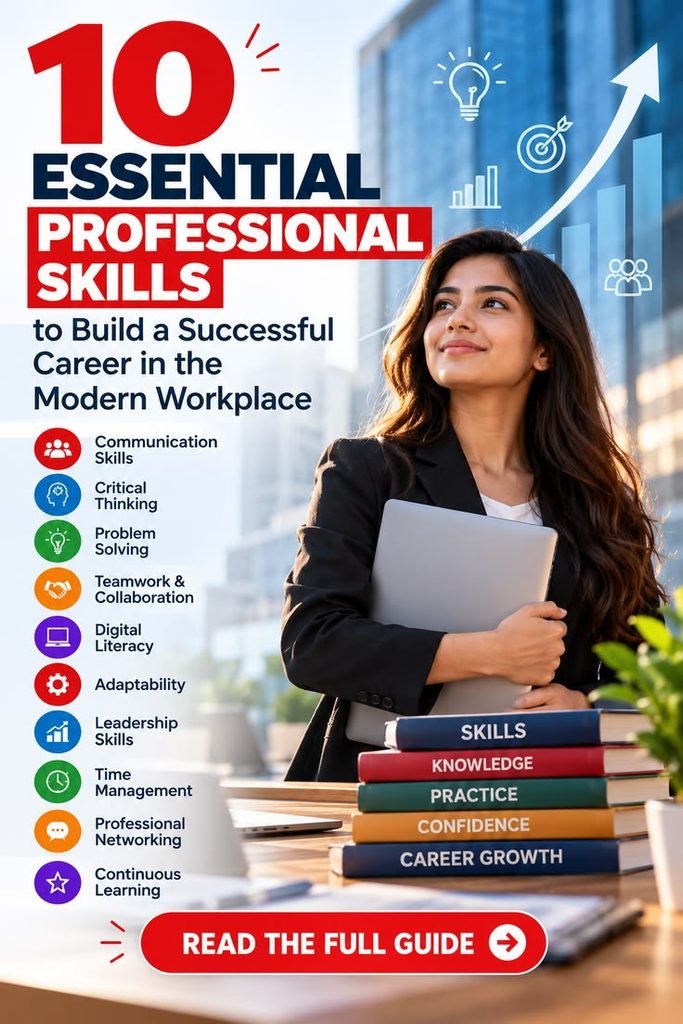
Artificial intelligence, data analysis, cybersecurity, digital literacy, communication, critical thinking, creativity, adaptability, and leadership are among the abilities expected to become increasingly important in the coming years.
However, technical knowledge alone may not be enough to build a successful career. Employers also need people who can collaborate, solve problems, manage responsibilities, and adapt to unfamiliar situations.
Whether you are a student, recent graduate, freelancer, or experienced professional, investing in continuous learning can help you prepare for future employment opportunities.
The best approach is to combine relevant technical knowledge with strong human skills. By developing both, you can improve your professional value, remain competitive, and prepare for the changing demands of the international job market.
SEO Information
- Focus keyword: Professional skills employers value
- Secondary keywords: Future professional skills, skills employers want, in-demand workplace skills, future job skills, career development skills, professional skills for graduates.
- SEO title: Which Professional Skills Will Employers Value Most in the Coming Years?
- URL slug:
professional-skills-employers-value - Meta description: Discover the professional skills employers will value most in the coming years, from AI and cybersecurity to communication, leadership, and problem-solving.
Research Reference
The article’s future-skills discussion is supported by the World Economic Forum’s Future of Jobs Report 2025. Its research identifies AI and big data, cybersecurity, technological literacy, creative thinking, adaptability, and lifelong learning among the fastest-growing skills expected through 2030.
Read more: World Economic Forum – Future of Jobs Report 2025