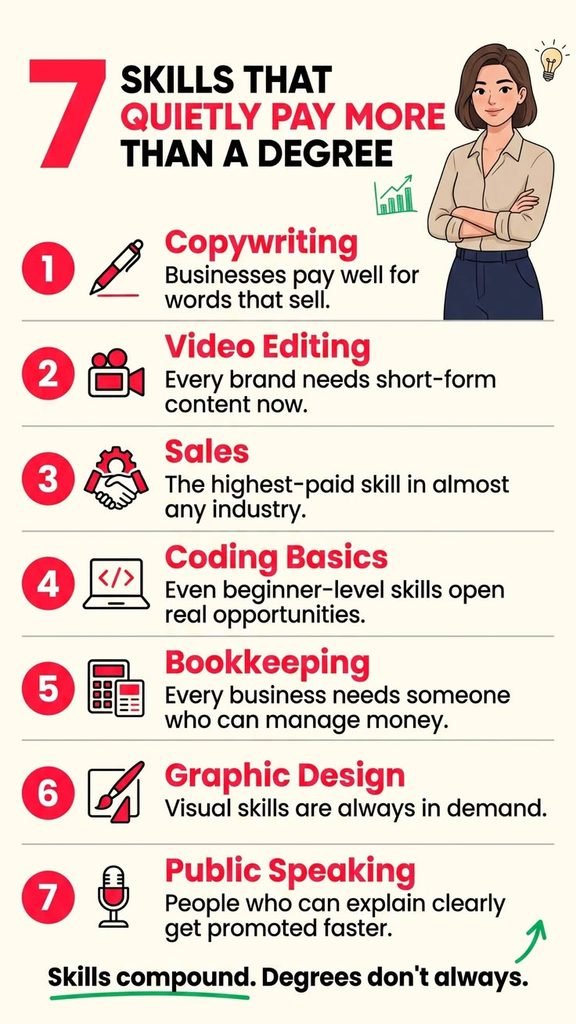
Building a successful career no longer depends entirely on having a university degree. Although formal education remains valuable in many professions, businesses are increasingly interested in people who can demonstrate practical abilities, solve problems, and contribute to organizational growth.
Technology, remote employment, freelancing, and online education have created new opportunities for individuals to develop professional skills without spending several years in university. Today, someone can learn digital marketing, web development, graphic design, data analysis, and other valuable skills through online courses, practical training, and independent projects.
For young people, recent school graduates, job seekers, and individuals interested in changing careers, developing high-income skills can provide an alternative route toward professional growth.
However, learning a skill is only the beginning. You must also understand how to apply your knowledge, demonstrate your abilities, build experience, and find businesses or clients willing to pay for your services.
So, how can you develop high-income skills without a university degree? Here are practical steps to help you get started.
1. Understand What High-Income Skills Are
High-income skills are specialized abilities that can provide significant financial value because businesses and individuals need them to solve important problems.
Unlike some traditional jobs that depend heavily on academic qualifications, certain skill-based careers place greater emphasis on practical knowledge, experience, and the ability to deliver results.
For example, businesses need professionals who can develop websites, manage advertising campaigns, analyze business information, create digital products, and improve customer experiences.
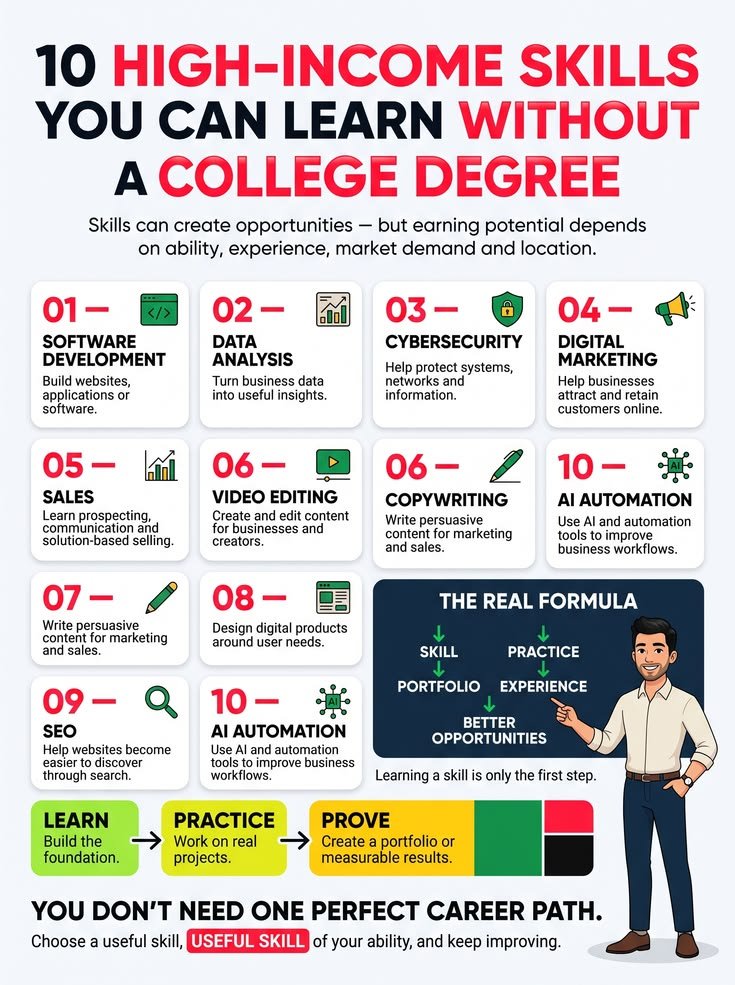
Some popular high-income skill areas include:
- Software development.
- Artificial intelligence.
- Digital marketing.
- Cybersecurity.
- Data analysis.
- Video editing.
- Copywriting.
- Graphic design.
- Sales and business development.
- Cloud computing.
- Search engine optimization.
- Project management.
These skills can create opportunities in traditional employment, freelancing, consulting, and entrepreneurship.
However, earning potential varies depending on your expertise, location, industry, experience, and ability to attract clients or employers.
2. Choose a Skill That Matches Your Interests
One of the most important decisions is selecting the right skill to learn.
Many beginners make the mistake of choosing a career simply because they hear that other people are earning large amounts of money from it.
Although market demand matters, your interests and willingness to practise are equally important.
Start by considering the type of work you enjoy.
For example:
If you enjoy technology: Consider software development, cybersecurity, artificial intelligence, or cloud computing.
If you enjoy creativity: Explore graphic design, video editing, animation, or content creation.
If you enjoy communication: Consider copywriting, digital marketing, sales, or public relations.
If you enjoy working with numbers: Explore financial analysis, data analytics, bookkeeping, or business intelligence.
If you enjoy organization: Consider project management, virtual assistance, or business operations.
Choose one main skill and concentrate on developing it before moving into several unrelated areas.
3. Use Free Online Learning Platforms
You do not necessarily need to attend an expensive institution to acquire valuable professional knowledge.
Several online learning platforms provide access to courses, tutorials, educational resources, and professional training programmes.
Some useful platforms include:
- YouTube: Offers free tutorials covering programming, design, marketing, business, and other professional subjects.
- Coursera: Provides courses and professional certificates from universities and industry organizations.
- Udemy: Offers practical training in technology, business, design, and digital services.
- edX: Provides online courses from educational institutions and other learning organizations.
- Google Skillshop: Offers training in Google advertising and related digital products.
- HubSpot Academy: Provides free training in marketing, sales, customer service, and business development.
Start with beginner-friendly courses that explain the fundamentals of your chosen skill.
You can gradually progress to advanced subjects as your understanding improves.
The important thing is to avoid collecting certificates without developing practical abilities.
4. Learn Artificial Intelligence and Technology Skills
Artificial intelligence is changing how businesses operate, making technology knowledge increasingly valuable across different industries.
You do not need to become a computer scientist to benefit from learning AI-related skills.
For example, professionals can learn to use AI tools for research, content development, workflow automation, customer support, data organization, and productivity.
More advanced opportunities include:
- AI application development.
- Machine learning.
- AI automation.
- Chatbot development.
- AI integration.
- Data engineering.
- AI consulting.
You can begin with basic AI literacy and gradually explore more specialized technical areas.
Understanding how to use technology to solve practical business problems can help you become more competitive in the employment and freelance markets.
5. Develop Digital Marketing Skills
Digital marketing is another valuable career area that does not always require a university degree.
Businesses need professionals who can promote products, attract customers, increase online visibility, and improve sales through digital channels.
Important areas to explore include:
- Search engine optimization (SEO).
- Social media marketing.
- Email marketing.
- Content marketing.
- Paid advertising.
- Marketing analytics.
- Affiliate marketing.
You can begin by learning how search engines work, how businesses attract online audiences, and how social media platforms support marketing activities.
Practise by creating a small blog, managing a sample social media account, or developing a marketing campaign for a personal project.
These activities can help you build practical experience and create portfolio examples.
6. Learn Web Development and Programming
Web development offers opportunities for people interested in building digital products and online services.
Businesses need websites for advertising, e-commerce, customer communication, online bookings, and business operations.
You can begin by learning HTML, CSS, and JavaScript before exploring more advanced programming languages and frameworks.
Other areas include:
- Front-end development.
- Back-end development.
- Mobile application development.
- WordPress development.
- Database management.
- Software testing.
There are many free resources available for beginners, including programming tutorials, documentation, and practical coding exercises.
Create small projects as you learn. For example, you could build a personal portfolio website, a business landing page, or a simple online application.
Practical projects will help demonstrate your abilities to potential employers and clients.
7. Build Data Analysis Skills
Data analysis is becoming important because organizations need reliable information to make business decisions.
Companies collect information about customers, sales, financial performance, website activity, and operational processes.
Professionals who can organize, interpret, and present this information can provide valuable services.
Start by learning Microsoft Excel or Google Sheets.
Then explore:
- SQL.
- Power BI.
- Tableau.
- Python.
- Data visualization.
- Basic statistics.
You can practise by working with publicly available datasets and creating simple reports or dashboards.
A portfolio containing completed data projects can help demonstrate your practical abilities even without previous employment experience.
8. Develop Sales and Communication Skills
Technical abilities are valuable, but the ability to communicate and sell products or services can also create significant career opportunities.
Businesses need professionals who can identify customer needs, explain products, build relationships, negotiate agreements, and generate revenue.
Sales skills are useful in industries such as technology, finance, real estate, telecommunications, retail, and business consulting.
Important abilities include:
- Negotiation.
- Persuasive communication.
- Customer relationship management.
- Lead generation.
- Presentation.
- Active listening.
- Business development.
You can develop these abilities through online training, practical exercises, customer-facing roles, and freelance projects.
Learning how businesses acquire and retain customers can also help you become more valuable in the workplace.
9. Practise Through Real Projects
Watching tutorials and completing online courses can help you understand a subject, but practical experience is what allows you to apply your knowledge.
Once you understand the basics of your chosen skill, begin working on projects.
For example:
- A graphic designer can create sample logos and promotional materials.
- A writer can publish articles and website content.
- A web developer can build functional websites.
- A digital marketer can create sample advertising campaigns.
- A data analyst can prepare reports using public datasets.
- A video editor can produce short promotional videos.
These projects allow you to identify weaknesses, improve your abilities, and develop confidence.
You can also volunteer your services for suitable organizations or take on small assignments to gain experience.
10. Create a Professional Portfolio
A portfolio is an important tool for demonstrating your abilities to employers and potential clients.
Without a university degree, practical examples of your work can help communicate what you know and what you can accomplish.
Your portfolio should contain your strongest projects and explain the skills you used to complete them.
You can create a portfolio using:
- LinkedIn.
- Behance.
- GitHub.
- Canva.
- A personal website.
- Google Drive.
For example, a software developer can showcase programming projects on GitHub, while a graphic designer can display creative work on Behance.
Keep your portfolio organized and update it as your abilities improve.
11. Earn Professional Certifications
Although you may not have a university degree, professional certifications can help demonstrate your commitment to learning and developing specialized knowledge.
Depending on your chosen career, you can explore certifications in:
- Cloud computing.
- Cybersecurity.
- Digital marketing.
- Project management.
- Data analytics.
- Information technology.
- Business administration.
Some employers recognize industry certifications as evidence of relevant technical training.
However, certification requirements vary across professions. Certain regulated careers, including medicine, nursing, law, and some engineering positions, require formal qualifications or professional licensing.
Research the requirements of your chosen industry before investing in training.
12. Find Opportunities Through Freelancing and Professional Networks
Once you have developed a useful skill and prepared a portfolio, start looking for opportunities to earn money and gain experience.
Freelancing platforms such as Upwork, Fiverr, Freelancer.com, and PeoplePerHour connect independent professionals with clients around the world.
You can also use LinkedIn to connect with recruiters, business owners, and professionals working in your industry.
Start by applying for projects that match your abilities.
Do not worry if your first assignments are relatively small. Completing projects successfully can help you gain experience, develop client relationships, and build a stronger professional reputation.
As your expertise increases, you can pursue more complex projects and better-paying opportunities.
13. Develop a Consistent Learning Routine
Developing a high-income skill requires patience and consistent practice.
Instead of trying to learn everything within a few weeks, create a realistic learning schedule.
For example, you could organize your week as follows:
| Activity | Suggested Time |
|---|---|
| Watching educational tutorials | 3 hours |
| Practising your chosen skill | 5 hours |
| Working on personal projects | 3 hours |
| Researching industry trends | 1 hour |
| Building your portfolio | 2 hours |
| Connecting with professionals | 1 hour |
You can adjust this schedule depending on your responsibilities and available time.
The goal is to make continuous improvement part of your routine.
Common Mistakes to Avoid When Learning High-Income Skills
Beginners sometimes struggle because they focus more on quick earnings than developing valuable abilities.
Here are some mistakes to avoid:
- Learning several skills without mastering one.
- Buying expensive courses without researching their quality.
- Collecting certificates without practical experience.
- Expecting immediate financial success.
- Ignoring communication and customer service.
- Failing to build a portfolio.
- Giving up when learning becomes difficult.
- Following unrealistic online income promises.
Remember that developing a valuable professional skill takes time, practice, and dedication.
Conclusion
Developing high-income skills without a university degree is possible because modern learning resources, digital platforms, and international employment opportunities have made professional training more accessible.
You can begin by identifying a skill that matches your interests and market demand. Use online courses, tutorials, and practical projects to develop your knowledge.
Focus on areas such as artificial intelligence, digital marketing, software development, data analysis, cybersecurity, sales, and graphic design.
Most importantly, demonstrate what you can do through a professional portfolio, relevant certifications, and practical experience.
A university degree can provide valuable educational opportunities, but it is not the only way to develop a successful career. By investing in your abilities, remaining consistent, and adapting to industry changes, you can build professional opportunities and work toward a higher earning potential without following a traditional university pathway.