Let me tell you a hard truth. If you are still trying to close serious clients on Instagram, you are looking in the wrong place.
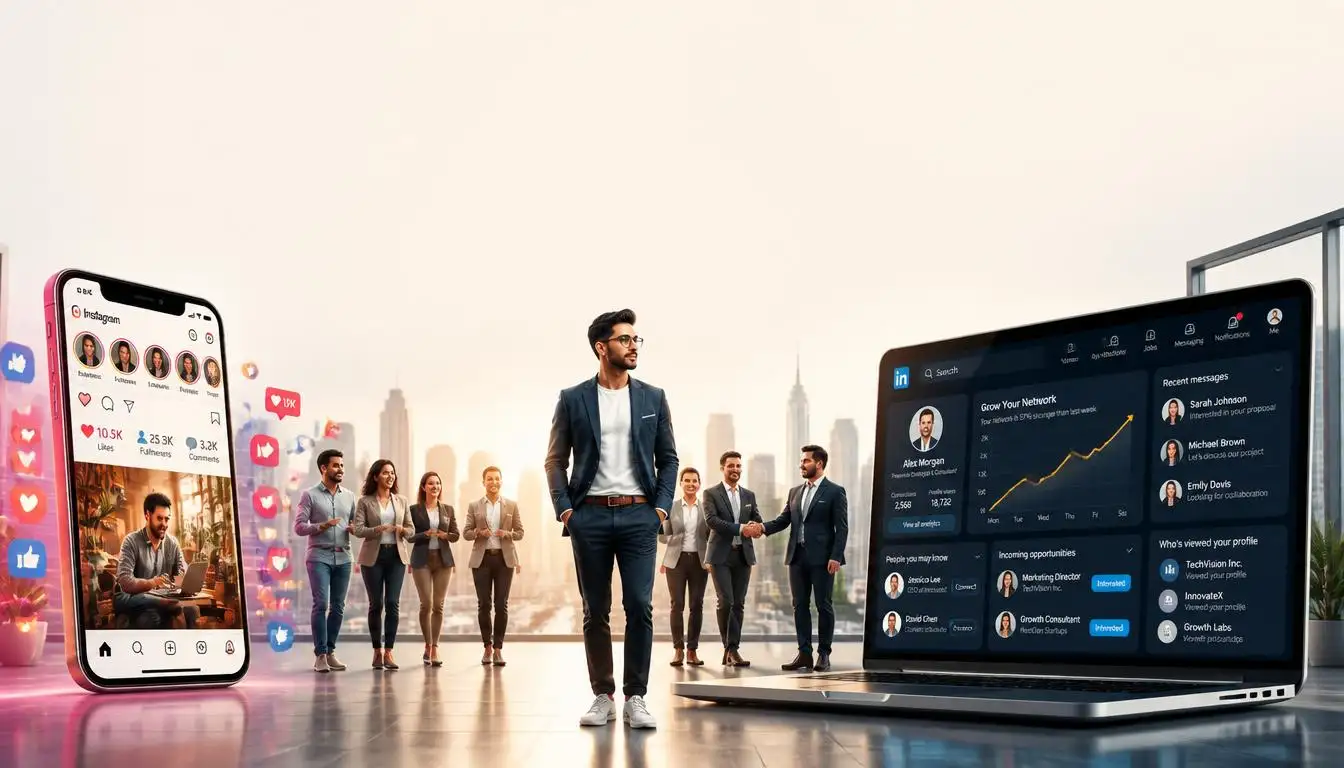
Instagram gives you followers. LinkedIn gives you decision makers. And the difference matters a lot. Followers clap. Decision makers pay.
In recent years, a noticeable shift has taken place. More businesses are actively using LinkedIn to find and evaluate service providers rather than relying solely on social media discovery.
There are freelancers out there with strong skills but completely blank LinkedIn profiles. No authority, no positioning. And then they wonder why they are not getting clients. How is a client supposed to trust you?
This article is not about LinkedIn growth. This is about building a LinkedIn client engine. System, psychology, execution, everything. Because clients do not come from luck. They come from positioning.
The Real Difference Between LinkedIn and Instagram
On Instagram, you post a post, 500 people see it, 50 like it, and 2 comment, but no clients come. On LinkedIn, you post an insightful post, 100 people see it, but 10 of them are decision makers.
And a DM from even one decision maker is more valuable than 500 likes on Instagram. This isn’t a platform difference. It’s an audience difference.
Instagram has the general public, while LinkedIn has people who can actually buy services.
Part 1: What LinkedIn Marketing Actually Is
First, let us break a common myth.
LinkedIn is not a job portal. LinkedIn is also not an attention platform. LinkedIn is a trust platform.
Dance reels do not go viral here. Insights get respected here.
Remember one powerful rule: People do not hire the best. They hire the most trusted. If you do not come across as trustworthy, you will be ignored, no matter how talented you are.
LinkedIn marketing means positioning yourself in a way that people already see you as an expert before you even DM them.
The biggest problem in freelancing is not competition. Competition exists everywhere. The real problem is that people do not take you seriously.
Part 2: Positioning Means Power
Your LinkedIn profile is not a resume. Your profile is a landing page. And the goal of a landing page is conversion.
If you just write “Freelancer” in your headline, you are blending into the crowd.
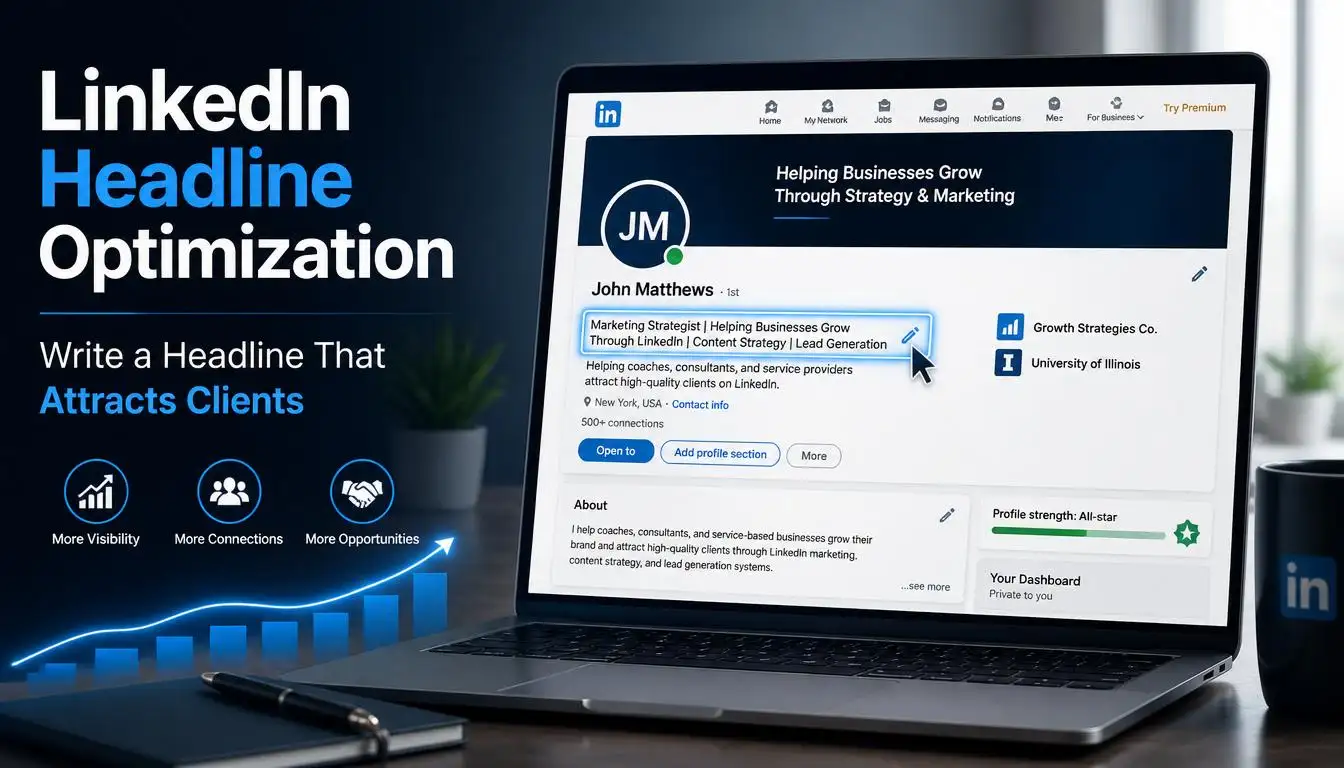
Your headline is the first thing a client reads. If you want a proven formula for writing it, check this guide.
Here is an example to make it clear. If you are a digital marketer, you cannot simply write “I am a Digital Marketer.” Instead, try something like this:
Helping coaches generate qualified leads through LinkedIn content strategy.
Feel the difference? Now you are not offering a service. You are offering a solution.
Your Summary section should make three things crystal clear:
- What problem do you solve?
- How do you solve it?
- What result does the client get?
One important principle to keep in mind: numbers build trust. Wherever possible, add case studies, testimonials, and specific results to your profile.
Clients do not hire people. Clients reduce risk. Your profile should reduce their risk.
Treat Your Profile Like a Landing Page – Real Example
A graphic designer’s headline was “Graphic Designer | Fiverr Level 2 Seller.” He changed it to “Helping E-commerce Brands Increase Sales With High-Converting Product Visuals.”
The first headline simply contained the job title. The second contained the client’s benefit. A week later, he received his first LinkedIn inquiry message.
No new skills had been added to his profile. Only the positioning had changed. It’s a small thing, but it has a huge impact.
Part 3: Content That Attracts Clients

Now comes the real marketing part: content.
Posting generic “Good Morning” or motivational quotes on LinkedIn will not get you clients. To attract real clients, your content needs to fall into three categories:
- Problem Awareness – Content that makes your target audience feel understood
- Authority Insights – Your expert take on industry topics
- Mini Case Studies – Short, real results you have delivered
For example, imagine a post that says: “Most SaaS founders fail on LinkedIn because they focus on selling. Here is a 3-step content funnel that brings inbound leads.”
Now imagine a SaaS founder reading that. He thinks, “This person understands me.” That is marketing.
Your LinkedIn content should feel like a free consultation. When someone reads your post, they should immediately think, “This person knows their work.”
Remember this line: On LinkedIn, you do not need to go viral. You need to be valuable.
Simple Structure of a Content Calendar
If you post three posts a week on LinkedIn, follow this structure.
First post – Problem Awareness, such as “These 3 mistakes are causing your LinkedIn profile to not attract clients.”
Second post – Authority Insight, such as “I sent 50 cold DMs – here’s the result and what I learned.”
Third post – Mini Case Study, such as “One client’s conversion rate was 2%, I did this and it increased to 8%.” By consistently posting these three types of posts, your LinkedIn profile becomes a client magnet within 60 days.
Part 4: Outreach Without Desperation
Now comes the second engine: outreach. But not spam. Strategy.
Step 1: Get clear on your niche. You cannot do smart outreach without knowing exactly who you are targeting. Pick an industry, a role (founder, marketing manager, coach), and a pain point you solve.
Step 2: Identify 20 to 30 relevant founders or decision-makers using LinkedIn search filters. Filter by industry, job title, and location. Do not mass-connect. Be selective.
Step 3: Before sending any DM, engage with their content for 3 to 5 days. Leave a genuinely thoughtful comment, not “great post” but something that adds to the conversation. This warms them up before you ever land in their inbox.
Step 4: Send a value-first DM that references something specific about them. The example above works well. The key is that your first message should give, not ask.
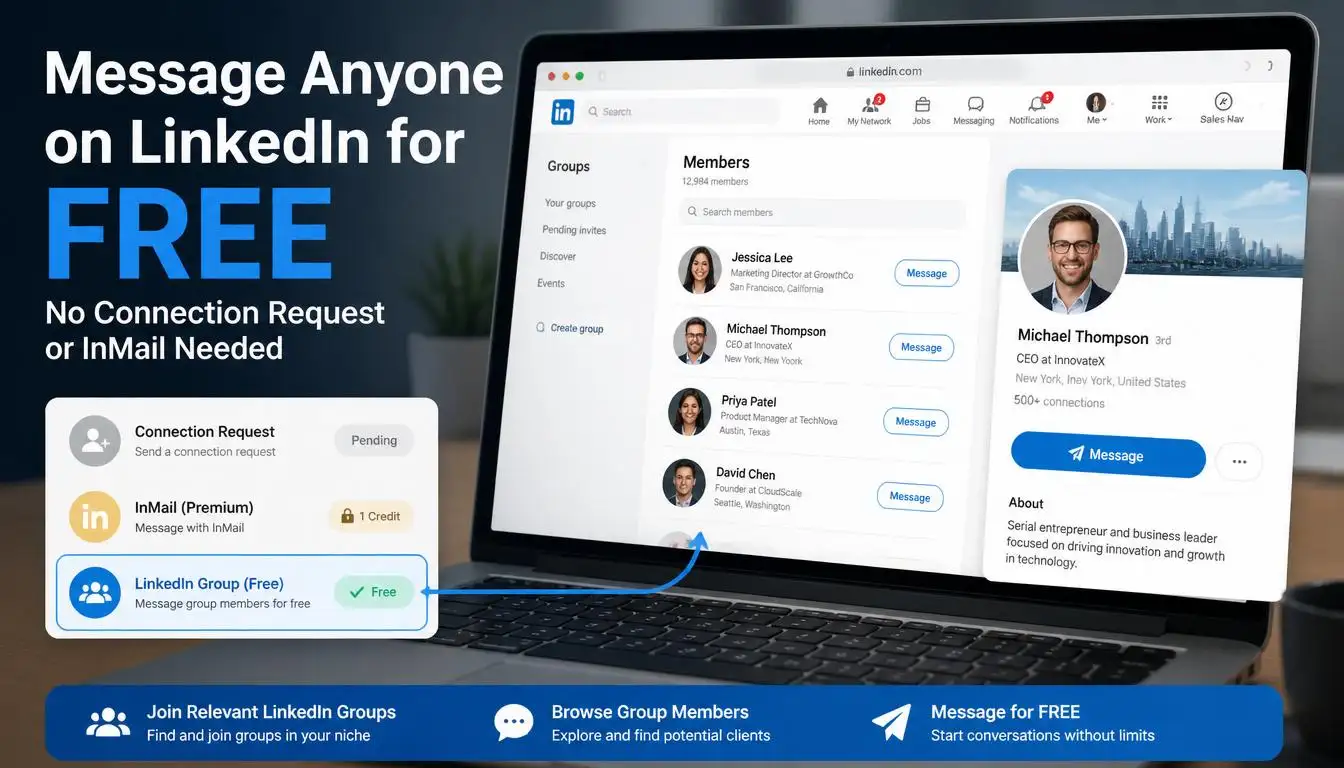
If they have not accepted your connection yet, you can still message them without waiting.
Here is an example of what a value-first DM looks like:
“Hi, I have been following your content on startup growth. I noticed your LinkedIn presence has potential for stronger inbound leads. If you would like, I can share a quick audit.”
Notice what is happening here. You are not asking for work. You are showing an opportunity.
Desperation repels. Confidence attracts.
And always remember: Marketing is not about selling. Marketing is positioning.
Real Example of Outreach Message – What does it do?
Wrong message: “Hi, I am a digital marketer with 3 years of experience. I can help grow your business. Let me know if interested.” This is generic, boring, and gets deleted.
Right message: “Hi [Name], I came across your post about struggling with LinkedIn organic reach. I recently helped a SaaS founder in the same situation generate 15 inbound leads in 30 days using a simple content framework. Happy to share what worked — would that be useful?” It is specific, value-first, and curious.
This is the difference between an ignored message and a replied message.
Part 5: The Timeline Reality
Here is an uncomfortable truth. LinkedIn does not give you clients in 7 days.
- In the first 30 days, your only job is to show up. Post consistently, optimize your profile, and start engaging with others’ content. You are not expected to get clients yet. You are building familiarity.
- In the next 30 days, the people who kept seeing your name start to recognize you. This is when trust forms — not through pitching, but through consistent value. A thoughtful comment, a useful post, a case study. These small things compound.
- After 60 days, the opportunities begin. A DM here, an inquiry there. Not because you got lucky, but because you stayed visible when most people gave up.
Most beginners quit within the first 15 days, saying “it is not working.” In reality, the system is working. They are just not being patient. And that is exactly where most people give up.
Remember this line: Reputation compounds.
One post today. One insight tomorrow. One case study the day after. And after 60 days, you will not be invisible anymore.
Being invisible is the biggest risk in freelancing. Do not build attention on LinkedIn. Build authority.
Job seekers compete. Experts attract. You decide which one you want to be.
Before you move to execution, keep this in mind: most freelancers fail on LinkedIn not because the platform does not work, but because they treat it like a vending machine.
They put in a few posts, send a few DMs, and expect clients to fall out. LinkedIn does not work that way. It works like a reputation system.
The four pillars: positioning, content, outreach, and consistency, are not tactics. They are a mindset shift. Start with one, build the habit, then layer the rest.
Common Mistakes People Make on LinkedIn
The first mistake is leaving a profile incomplete and then starting outreach; the client sees the profile, but trust isn’t built.
The second mistake is sending a sales pitch from day one without building a relationship.
The third mistake is posting for a week, seeing no results, and then giving up.
The fourth mistake is connecting to everyone; random connections don’t build high authority. The fifth mistake is writing only about your services on LinkedIn; content that helps others, not promotes your own, is the most popular.
FAQs
Q: Is LinkedIn better than Instagram for getting freelance clients?
For finding serious, paying clients, LinkedIn is more effective because it is used by decision makers and business owners, not just general audiences.
Q: How long does it take to get clients from LinkedIn?
LinkedIn results are not immediate. Most people begin seeing genuine interest and inquiries after 60 to 90 days of consistent activity. The key is not to stop before that window closes.
Q: What should I write in my LinkedIn headline?
Instead of just writing your job title, focus on the result you deliver. For example, “Helping coaches generate qualified leads through LinkedIn content strategy” is far more effective than “Digital Marketer.”
Q: What kind of content works on LinkedIn?
Problem awareness posts, authority insights, and mini case studies perform best for attracting clients. Motivational quotes and generic posts rarely convert.
Conclusion
LinkedIn in 2026 is not optional for freelancers and service providers. It is leverage. And those who understand leverage are the ones who scale.
Most freelancers stay invisible not because they lack skill, but because they never build authority where their clients are actually looking. LinkedIn rewards those who show up with clarity and consistency over time — not those who show up the loudest. Start today, stay the course, and let your reputation do the selling.
Disclaimer: The strategies and timelines mentioned in this article are based on general industry observations and may vary depending on your niche, consistency, and market conditions. LinkedIn’s features and algorithm may change over time. Always refer to LinkedIn’s official resources for the most current platform guidelines.